Monday, 1 April 2013

50 years ago the GMC were more circumspect about commenting on doctors and the media


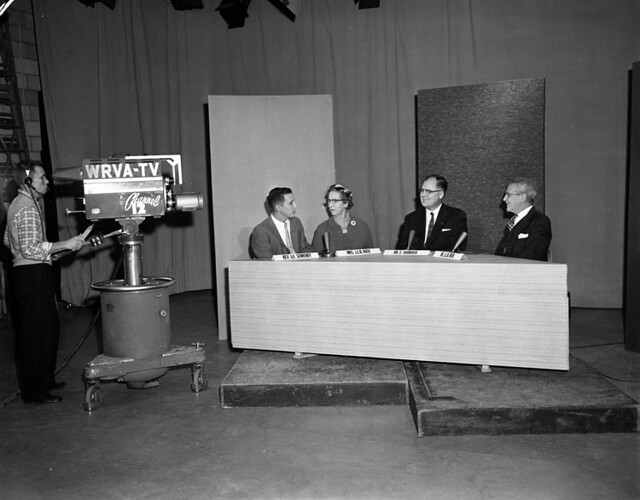
Richmond Council of Churches, WRVA-TV
Richmond Council of Churches, WRVA-TV from The Library of Virginia

For most of the 20th century doctors in the UK were urged to stay anonymous when speaking in public. The big fear was that doctors would use publicity to advertise themselves; to suggest that they were better than other doctors.

Here follows an extract from the BMJ in 1962 called "The Doctor's Code". It is written by Sir David Campbell a past president of the GMC (General Medical Council). 
"The other example is advertising, whether directly or indirectly, by canvassing or touting for patients or by causing articles to appear in the press drawing the attention of the public to the superior skill of the advertiser. If such practices were permitted, it would cut at the root of all decent relationships between members of the profession, and the public might be grossly misled. For there would be no guarantee of the superior merit of the doctor with the fewest scruples in praising himself and his methods. "
So that is why doctors were urged to stay anonymous. The BMA had it as part of their code of coduct until the 1980s. It was regularly debated at the Annual Representative Meeting. By 1984 the leadership of the BMA was perhaps out of step with the voting membership as this report in the BMJ states.
"T
he representative body
wanted anonymity "preserved in all cases, except where a
practitioner is acting as the official spokesman of a health
authority or professional body, or where the public interest
clearly demands the naming of the practitioner.I had been mildly surprised at Manchester that the representative body had supported this motion: it had a Canute-like ring. Most committee members were of the same mind, for they saw little wrong with a doctor being identified in the media."

But the BMA resolutions were not enough for some. They wanted the GMC to come out and take a stand on anonymity and the doctors who they perceived as breaking it. A letter to the BMJ in 1968 from Athur Wigfield states:
"
Pious resolutions on the subject by the
B.M.A. are patently ineffective. The mainpurpose of this letter is to ask if we may ever expect the General Medical Council, some ofwhose members may be presumed to read the papers, to deliberate or act. Medical ethics are surely not limited to sober driving and impeccable conduct in the presence of patients. They extend to the steps of the hospital. In the interests of all of us someone should remind others of us that it is better to earn lifelong respect and adulation of colleagues than achieve ephemeral notoriety in the eyes of a sensation-lapping and morbidly curious public."
Let's go back to the ex-GMC president, Sir David Campbell. This is another extract from his piece the Doctor's Code where he explains that although some call for the GMC to make pronouncements on what are acceptable standards of behaviour in the light of new media, they can not.
"And here I would like to say something with regard to a criticism which has sometimes been levelled at the Council and indeed at the President. It is said that while the carefully worded notice tells practitioners in broad outline what they should not do, the Council has not seen fit to define in a positive sense what the practitioner might do. It is alleged that the Council is strangely mute or evasive when it is pressed for a pronouncement on, for example, any adjustment of conduct which might be permitted in the light of modern facilities for the health education of the public through the medium of the press or the radio or television. And it is averred that practitioners doubtful about their position in these matters receive little help of a practical nature if they address direct questions to the President or to the Council. Any hesitation to express an opinion or reticence on the part of the Council or the President is due to their statutory position. They are the judges of professional conduct in the last resort and are bound to judge every case that comes before them on the facts of the case as presented in evidence. Neither the Council, therefore, nor its President, who in fact has to deal with correspondence of this nature, can possibly commit the Council in advance to a specific view on any question which is not covered by decided cases. I may add that the Council while indicating the desirability of anonymity in broadcasting has not attempted to prevent the publication in the press of articles on medical subjects or broadcasting by registered medical practitioners. It rests, however, with practitioners who contribute such articles or take part in such activities to exercise their discretion so as not to afford ground for complaint to the Council."
So half a century ago new media was causing a bit of a furore. The GMC was cautious about taking a stand. Fast forward to 2013 and the GMC issues guidance that doctors should shun anonymity in social media. They have stepped in to territory that they sought to avoid 50 years ago and this is the result.

Wednesday, 27 March 2013

GMC guidance- doctors online should reveal their identity

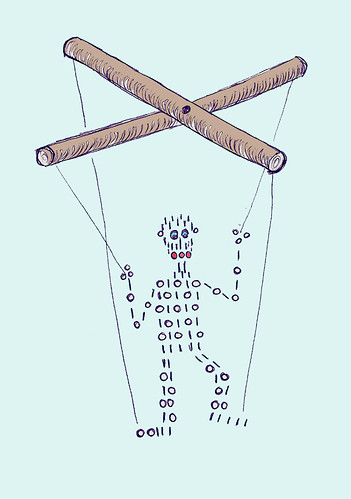
je digitale alter ego
"je digitale alter ego" by verbeeldingskr8

Yesterday, March 25th the GMC published the updated version of Good Medical Practice.  And for the first time, supplementary explanatory guidance on the use of social media is also included. The "doctors and social media" guidance was issued in draft last year, was relatively uncontroversial and didn't provoke a lot of discussion. This is what I wrote prior to the publication of the draft guidance.

One line in the final version has received a lot of attention on the twittersphere : "If you identify yourself as a doctor in publicly
accessible social media, you should also identify yourself by name."

Below is the full section from which this comes, followed by the wording of the draft guidance.

Final
17  If you identify yourself as a doctor in publicly accessible social media, you should also identify
yourself by name.Any material written by authors who represent themselves as doctors is likely to be taken on trust and may reasonably be taken to represent the views of the profession more widely.
18  You should also be aware that content uploaded anonymously can, in many cases, be traced back to its point of origin.

Draft
17 If you are writing in a professional capacity, you should usually identify yourself. Any material written by authors who represent themselves as doctors are likely to be taken on trust and/or to represent the views of the profession more widely. You should also be aware that content uploaded anonymously can, in many cases, be traced back to its point of origin.

Why has the wording been changed? The GMC have tweeted that the guidance applies "if you are tweeting as a doctor.Then you should identify yourself. Being open+honest helps maintain trust."

The draft guidance was more ambiguous. What was writing in a 'professional capacity'? And you should 'usually' identify yourself. The final guidance is very clear. For people who have not yet started a blog or joined Twitter this clarity may be useful.

But I don't think that many of us who are online already expected this. The RCGP published the final version of its social media highway code last week where they say that as a general principle doctors should use their professional name online if portraying themselves as a registered doctor, but that use of a pseudonym might be reasonable in some circumstances eg moderating a forum, writing about a sensitive subject, or for when comedy or satire.

What happens if a doctor is currently tweeting under a pseudonym and does not start using their real name before April 22nd when the guidance is enacted? Will they be disciplined or reported? How will the GMC respond? Usually most doctors are confident that they are working within the bounds of good medical practice but this is making some with existing pseudonymous twitter accounts, or blogs, feel uncomfortable. They are now deciding what steps they should take.

I have seen some doctors who tweet in their own names suggest that some might use the anonymity of the internet to raise concerns about patient safety or whistle-blow. Personally, I think that writing a blog post to raise concerns about patient safety would be a last resort after taking the steps which the  GMC recommend.
.
What does this guidance mean to you? I allow anonymous comments on this blog.

(By the way, I was glad to see that doctors are not going to be obliged to 'encourage' ill patients back to work -this had been one of the consultation controversies.)

EDIT: reaction from around the web
@GilulaArc, an orthopaedic surgeon, feels that anonymity is essential to protect those dissenting. She wrote a letter to a magazine in her own name which she feels stalled her career. Read more here.
@JobbingDoctor writes that the government sees the professions as people to be controlled. Ensuring doctors only contribute to social media in their own name is part of this. Read more here.
Other reaction collated here.

Monday, 19 November 2012

reddit for #meded

Reddit is one of those sites that seems to have been around for ever but that I have not understood. More recently it has been popping up in my Twitter timeline and elsewhere more often. So in the interests of learning by discovery I became a redditor a few hours ago and promptly set up a #meded subreddit.

Why?

Well, there seems to be a few good things about reddit.

It allows threaded discussions. 
It contributes to altmetrics on research articles. 
It allows community members to vote up and down content so adding a filter to the masses of new content we come across.
It might allow deeper engagement with content that tweets. 

And there has been some good discussion so far. What do you think? 

Friday, 16 November 2012

What I have learnt about blogging

I blog...

I blog... by alamodestuff

So if you have known me on Twitter or elsewhere for a while you will know that I am a big fan of blogging and I encourage everyone to start keeping one. Why? You will learn a lot and you will help others learn too!

I started my blog just over 4 years ago. Sometimes I will write a few posts in a week and at other times I leave it for a month or two. How often you write is up to you. It shouldn't feel like a chore.Write when you have something to share, a question to ask.

Blogging is public writing. Think about who your audience is. For me a massive strength is that all kinds of people read and comment here. This means that I can learn about many more different perspectives than if I was to walk down the corridor and ask my colleagues at work what they thought of the random idea I'd just had. But sometimes people won't understand what you say, the language you use or where you are coming from. That's OK. Just as in any communication, if someone doesn't understand you then don't get angry, just try and explain in a different way.

Writing helps me to develop my thoughts and get some way to understanding what has been perplexing me. Usually I ask a question at the end so that people who read the blog know that I didn't just want a soap box but that I am really interested in what they might add.  If no one comments on your blog, and you have wanted them to, then maybe people who were reading didn't know what kind of response you hoped for. Questions really help with this. If you are writing the post because you are developing an idea that arose out of a conversation somewhere else, then make sure that you let the other people involved know so that you can continue the conversation there. If there is someone whose insight you would really like then email them or send them a tweet with the link and ask them to leave a comment. And get into the habit of commenting on other people's blogs too. They will appreciate your feedback.

Sometimes people ask about ethics. Are there any particular ethical concerns? If you were writing for a journal or a magazine you would most likely have an editor who would tell you if what you were writing was really off for some reason. But you don't have an editor on a blog so you do have to take a bit more care and consider what you are writing. My own rules are that I don't mention a patient on my blog without asking their explicit consent. In fact, I don't often write about anything relating to my clinical work on this blog. If I am teaching and I realise that I would like to write a post about something which has come up then I would let the students know when I am with them. Sometimes, I don't realise at the time that I want to write about the episode but I always try to make sure that I at least let anyone involved know that I have written the post later. So I don't think there is anything particularly ethically troublesome about blogging, but if you have any doubts then don't be afraid to pass what you are going to write by someone else first.

Should you blog in your own name? I do. That doesn't mean that you have to. But I think that writing in your own name leads to a richer experience because you can make stronger links between your online and offline worlds.

And some practical tips? You can set your blog up on any number of sites. This is on Blogger, which is owned by Google and is really very easy to use and rarely down. Lots of other people choose Tumblr or Wordpress. Have a look around and see what you think will suit you.

Do make sure that you enable sharing buttons on your blog so that people can easily share it with others. And let people subscribe by email too.

I usually add a picture to my posts because it brightens them up and hopefully helps with understanding too.

I allow anonymous comments here but I moderate all comments, mainly to stop spam getting through. It's easier than deleting.

And you'll hear people say every now and again that blogging is dead. But that's nonsense. How could it be when you have just started? Enjoy!

Sunday, 4 November 2012

Digital divide, health records access and online security


Oxford Internet Study 2011 http://oxis.oii.ox.ac.uk/blog/non-users-and-ex-users-looking-lifestage-education-and-income

The 'digital divide' is very real. The Oxford Internet study is conducted every two years and the above chart is from their most recent survey in 2011. Level of income here relates to household income rather than individual outcome. If you live in a household with an income above £40K it is almost guaranteed that you will have online access. If you live in a poor household with an income of less that £12.5K it is most likely that you won't. There are also stark divisions related to age and educational levels described here.

I've just been having an interesting discussion with Amir Hannan, a GP who is a very strong advocate of patient access to their own health records, about how the digital divide means that those who are most likely to have health problems are least likely to be online... bringing us in the direction of a digital 'inverse care law'.

So if you are a GP and are encouraging patients to access their records online what would you say to those who lack the means to be online? Amir said that patients who are not yet online are directed to a course run by the local library which helps to get people online. But what if you can not afford to have your own access at home, should patients be encouraged to access their medical records from public places such as libraries or internet cafes? What are the risks? Or what about using a computer at the house of friends or family?

Of course, it's not only those who don't have their own computers at home who may use other computerss that they do not own themselves. What issues should you be concerned about if accessing your records from a computer that is also shared with your family or from your work place? Or a hotel lobby when on holiday?

A quick search does not reveal guidance about these issues for people in the UK. Here is the log-in page for the EMIS general practice records access. There is no link to information about online security. Contrast this with information which is available from online banking websites on what to look out for when using their services, for example here is a page on online security from Intelligent Finance.

If there are issues around the online security of accessing health records online, then those who don't have their own internet access at home, are more likely to be at risk. Do you have any examples of links to information in easy to understand forms which will help people to understand and address these issues? Or is it not an issue at all?

EDIT: some great guidance from BCS on accessing records http://www.bcs.org/upload/pdf/social-care-records.pdf <- they state if possible not to access from public computers, but if you do to clear browsing history.*** note this guidance is draft and NOT FOR CIRCULATION but I found it through Google ;-) ***

Tuesday, 23 October 2012

Renal #meded on Twitter