Showing posts with label empathy. Show all posts

Thursday, 12 December 2013

Reflections from #DotMed13


The last year has been very good for meeting great people. I first met Irish rheumatologist Ronan Kavanagh in Dublin in this year. That was in February when Shane O'Hanlon got us both to take part in a pre-conference workshop on social media at INMED (the annual scientific meeting of the Irish Network of Medical Educators). Next we met as a rheumatology conference in the UK- this time brought together by Philip Gardiner.

We Banjo 3 at #dotmed13
Last week I was back in Dublin for #dotmed13 - a conference curated by Ronan and Muiris Houston, a GP and medical journalist. It was a fascinating event. I ruminated this morning that it was like #med2 ( a tech driven conference) meets #mu13voice (medicine unboxed- a conference that seeks to explore ' a view of medicine that exceeds the technical' - Alexa Miller had similar thoughts in her blog post about the day and I think she explains it a lot better than me.

So at #dotmed13 we had banjo music and some of the most powerful storytelling I have ever heard- Jordan Grumet told some of the stories he tells in his blog of how medicine broke him and how he got back together again. Architect Ed Gavagan told us how life had broke him but how he got life back together again - helped in no small part by the bartender who took the time too listen when others didn't - and who eventually became his wife. I see many patients who have not been through exactly what Ed experienced but they have been unlucky and experienced hard and tragic lives. I must find the time to listen to them.


And after watching Alexa Miller speak at the Millenium Medicine conference in Texas earlier this year (it was live-streamed- I was at home in Cardiff- and it's well worth catching the video here) I was really excited about taking part in her workshop on how exploring art works could expand our creative approaches to medicine. She couldn't really stop us talking about Picasso's 'Girl before a mirror'!

Of course we had the techy stuff too. Lucian Engelen could not fly to Dublin because of bad weather but wowed us all by taking a picture of the audience through Google Glass from the Netherlands!  It was a great pleasure to finally meet Berci Mesko and Bryan Vartebedian who I have known for years through their blogs and twitter. They were both talking about their visions of the future of healthcare and the part that doctors would play in it. Medical student Mahmood Mirza and recent graduate Alan Corbett talked about social media and medical education- and presented a very balanced view of what students see as the pros and cons.

My own presentation revisited an idea about 10 reasons for a social media presence. In the past my orientation had been medical education alone- but I was able to share some great examples which I think make it reasonable for me to say that any doctor should explore social media. You can find the slides below.


Why does a twittering doctor tweet? - 10 reasons for a social media presence from Anne Marie Cunningham

If you get a chance to go to a conference like #dotmed13 then go. 

Sunday, 15 May 2011

"I'm sorry to have to tell you this...."

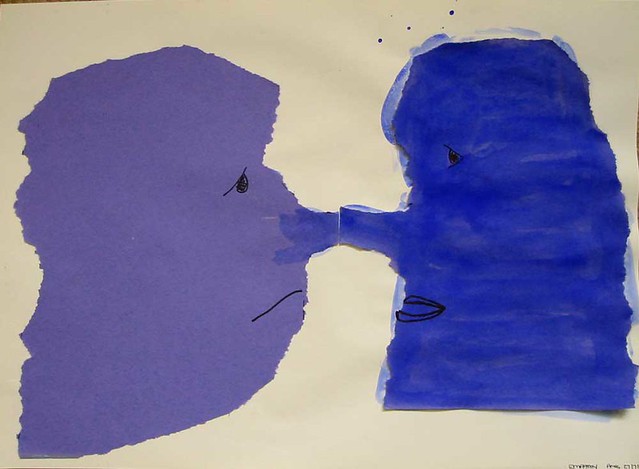
Empathy picture
Empathy by The Shopping Sherpa


Another Sunday morning, another stimulating conversation about medical education on Twitter.
It started with a tweet from Dr. Jonathon Tomlinson “To say you cannot learn insight and empathy is like saying you cannot learn science or a new language. Possibly true, but very sad.”

So can we teach empathy? What do we mean by empathy? A good review of the complexities was published earlier this year by some researchers from the University of East Anglia. They suggest that we might be better to step away from the concept of empathy and instead just focus on etiquette. It's a provocative read.

I wonder if teaching empathy isn't like teaching clinical reasoning. We need to first think of empathy as a disposition before concentrating on the skills. The following quote comes from a just-published study on how physicians think about clinical reasoning in students, is it an ability or a disposition? : "The ability-disposition distinction highlights the difference between teaching knowledge and skills, referred to as teaching-as-transmission, versus teaching attitudes, modifying personality and changing behaviour, referred to as teaching-as-enculturation."

So how can we transmit what we think is important to others about empathy? A few years ago,  I blogged about a communication skills session that I was teaching. I was aware of how this session on "breaking bad news" had to some become formulaic. But an interesting discussion did occur and we all questioned our thoughts and approaches to the topic.

Just as Krupat et. al suggest that in order to develop clinical reasoning we need to focus on  "encouraging self-awareness and mindfulness, modelling open discussion and inquiry, accepting doubt and uncertainty", I'd suggest that the same is true of developing empathy.
What we do not want is for students to leave thinking that empathy is just a set of behaviours. As this doctor tweeted: ""Empathy by rote" is a ridiculous concept. It's like teaching somebody to be "happy". Faked empathy is insulting."

Another doctor replied that to his mind one of the worst examples of this was: “ to score on 'empathy' student said 'sorry it has to be me to tell you this'”. The doctor was shocked as he saw this as the student putting “professional discomfort before patient distress”. It’s this kind of situation that we exactly need to tease out when talking to students about empathy and communication.

In a comment on a blog post by a doctor about breaking bad news, a patient writes of her feeling when she was told she had a serious condition. She explains how the doctor “As he spoke, he began to sip little bits of air in between his lips. This suggested to me he was feeling emotions as well. It made him more human and incredibly compassionate. I loved him for that.”

For some patients showing that we are human and have emotions to will be right. For others it might be seen selfish. They might want us to have ‘professional distance’, to just get on with the job. How with someone that we don’t know well can we figure out how to be? Do we have to accept that sometimes we will just get it wrong and that etiquette is the best we can aim for?

I don’t expect to reach the answers to those questions through this blog. But they are the kind of issues we should discuss with students when we are in real-life situations, so that we can help them to start developing their sensitivity to communication and their inclination to becoming good communicators.

More tweets can be seen in the storify here.
Regina Holliday tells the powerful story of a doctor who seems to lack all empathy here.
Excellent post on empathy by oncologist, Robert Miller, here.
Previous posts on medical students' thoughts about teaching and learning about empathy:
A medical student's thoughts on empathy and #meded
A twitter conversation with UK medical students about empathy


Wednesday, 9 March 2011

A medical student's thoughts on empathy and #meded

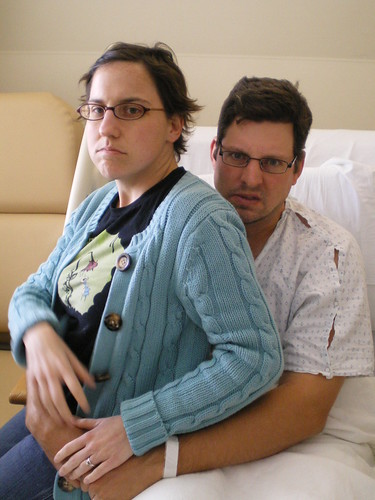
Patient + Wife by polaroid667
Patient + Wife a photo by polaroid667 on Flickr.
Today during the twitter conversation Gautam went back to one of my old blog posts on empathy and left a comment that I think deserves its own post, so I have posted it below. Much of what he writes strikes me as very true and accurate. What is the solution?

"I think the crux of the problem is the practitioners that medical students train with. I'm a final year in Sheffield and even though we have 12 weeks of general practice over two separate sessions, that leaves around 2.75 YEARS of training in hospital.

My own opinion is that in-hospital practitioners are less empathic because the prevailing attitude is that patients are problems to be solved. The 'House MD' way of looking at things still prevails amongst many practitioners - particularly surgeons but equally amongst medical physicians. Students are 'taught' empathy but equally, are (not overtly) dissuaded from feeling it, talking about it and dealing with it. The pressure is to deal with the 'real' problems - the broken leg, the tweaking of medication doses - and ignore the 'BS' - the trauma of losing a child or partner (unless they can be referred for CBT).

Contrasting hospital care to general practice, the existence of a lasting relationship between doctor and patient means that these concerns have to be taken more seriously simply because the patient is a recurring figure in the doctor's professional life. In other words, it makes sense to deal with these patients as people, rather than as problems.

Now, this theory of mine (as weakly-backed by evidence as it is!) holds some water, I feel, since patients who are seen in clinic regularly are treated differently by consultants. These patients' problems are listened to, their concerns are heard and dealt with as much as is possible. Time constraints exist with patients on the ward, as well, but for some reason, (perhaps worries about confidentiality and privacy?) they are not covered as completely.

Medical students can be taught to reflect and encouraged to empathise by the medical schools as much as possible. But while they are taught as apprentices by overworked and jaded physicians and surgeons who may not have time to empathise as much as they'd like to, true empathy remains out of reach."

Thank you, Gautam.

A twitter conversation with UK medical students about empathy

Wednesday, 8 April 2009

Emotional perspective taking

Last night my mum phoned to say that Traffic Cops was from Cardiff. Creepers break into houses and steal the keys of cars before stealing the cars. A car was found having rolled over on a road near where I used to work. The driver died. He couldn't be identified as his facial injuries were so severe, and a passenger abandined the car. A liaison office was called to break the news of the drivers death to the family. He called at the house of the owner of the car, to find that the house had been burgled and that the owner was alive and well.
I thought how awful it must be to find out that someone has died in your car, even if it not in any way your fault.
Next we were shown the owner of the car at the police station where he had gone with his father in the middle of the night to make a statement. He said that when he first heard that his car had been stolen and the driver had died in an accident he felt no sympathy. He thought to himself that it was what he deserved, after all he could have came up the stairs and clubbed him to death as these things happen.
I said out loud to my brother who was visiting that his response seemed to be the opposite of mine. My brother said 'maybe you empathise too much'.

So can we empathise too much? What does this mean? And in this case why were my feelings so different to the person who the event had actually happened to?

To read: Empathy Gaps in Emotional Perspective Taking